Reading Time – 4 minutes
For many years now, I’ve talked about what I call the Alpha 2.0 business model. This model exists for one reason: to free you from the nine-to-five job and protect you from the economic, technological, and cultural instability of the modern Western world. It’s not about building one massive company, becoming a celebrity entrepreneur, or chasing some Silicon Valley fantasy. It’s about building real independence, step by step, in a way that actually works for normal men.
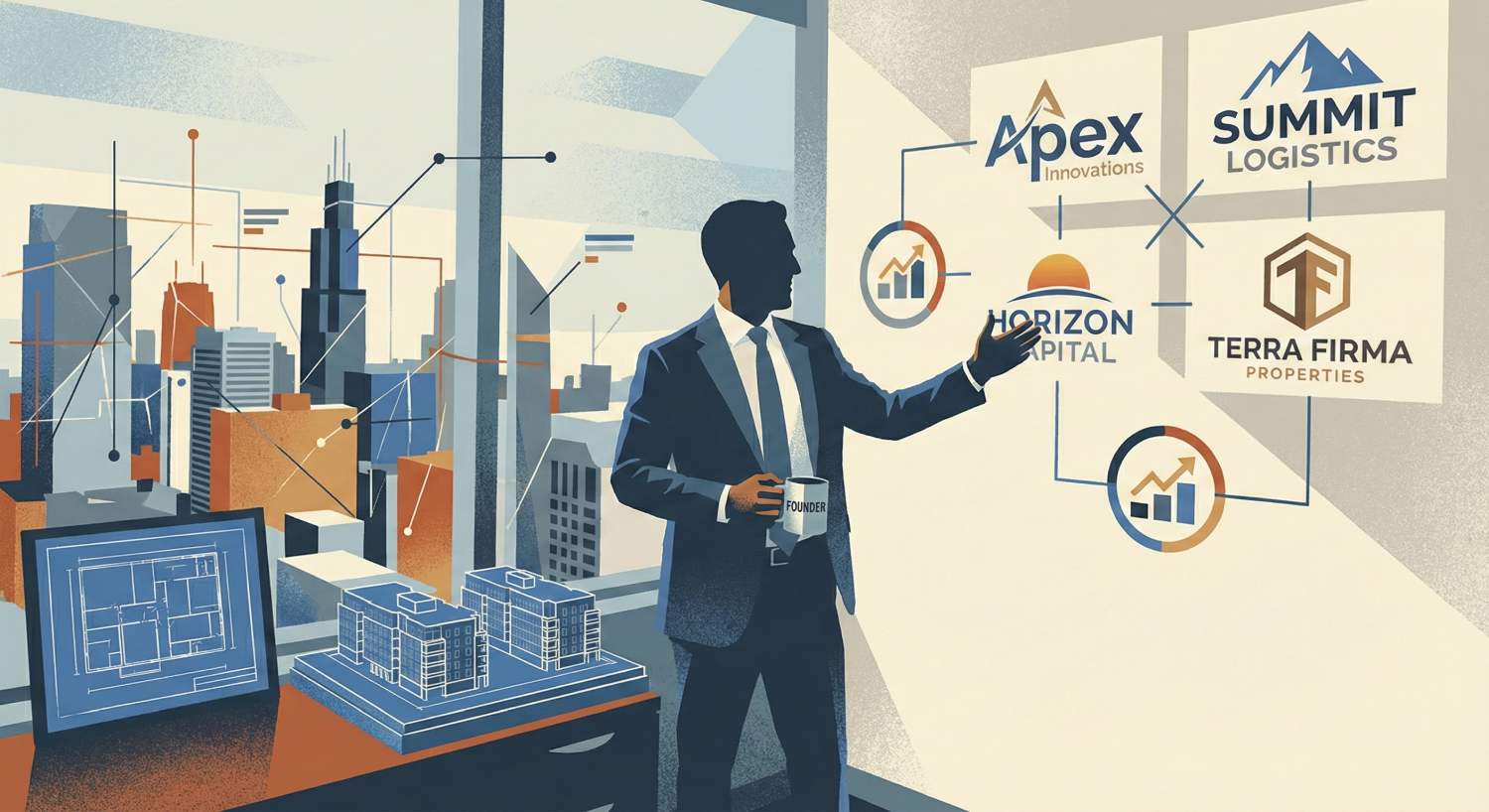
At the core of this model is a simple idea: over time, you build multiple small, location-independent businesses, each with its own income streams, operating in completely different niches. Not immediately. Not all at once. But deliberately, in phases.
The goal is long-term resilience. If something wipes out one business—AI, regulation, platform censorship, a technological shift—you’re angry and annoyed, but you’re still fine. If you only have one business and you lose it, you’re back to job hunting, begging corporations for permission to survive. That’s not freedom.
As one of my mentors, Dan Kennedy, famously said: the number one is the worst number in life. You never want to rely on just one of anything. That’s especially true in the era we’re living in now.
A common mistake ambitious guys make is trying to start several businesses simultaneously. This does not work. You are not Elon Musk, and neither am I. Starting multiple businesses at once is a great way to fail at all of them.
Instead, you start with one company and move it through a series of clearly defined phases. Only when that first company reaches stability do you even think about starting the second.
The Four Phases of Every Business
Every business you build will move through four distinct phases. Understanding these phases is critical, because each one requires a different mindset and different actions.
1. Startup Phase
The startup phase is where every business begins. This is the process of going from zero to consistent, reliable monthly income. That number is entirely up to you. It might be $500 a month, $3,000 a month, or $10,000 a month, depending on your location, lifestyle, and responsibilities.
This phase is about proving the business works. Nothing more. You are validating the idea, building the basics, and getting to predictable income. This is where most people quit, because it takes effort and patience.
2. Scaling Phase
Once the business is producing steady income, you have a choice. One option is to scale. Scaling means increasing gross revenue—more customers, more sales, more volume.
This phase is exciting because your income starts growing fast. But it comes with a cost. As you scale, things break. Systems fail. Customer service gets messy. Team issues show up. Taxes get more complicated. You make more money, but your stress goes up too.
This is normal. Scaling always breaks things.
3. Optimization Phase
After scaling, you must optimize. This is where many entrepreneurs mess up. Optimization means pausing aggressive growth and fixing everything that broke during scaling.
In this phase, you clean up systems, improve processes, tighten finances, simplify operations, and increase profitability. You’re no longer chasing higher revenue; you’re improving efficiency and margins. The business becomes smoother, more predictable, and easier to manage.
Your gross revenue may stay flat during this phase, but your profit and sanity improve dramatically.
4. Maintenance Mode
Maintenance mode is where freedom really begins. In this phase, you do the bare minimum necessary to keep the business running at its current level of income and profit.
If you’ve built the business correctly, this might take five to twenty hours a week. The exact number depends on complexity, delegation, and your skill as a business owner. The point is that the business no longer consumes your life.
And once your first business is in maintenance mode, now you’re ready for the next step.
With your first business stable and mostly hands-off, you start your second company in a completely different niche. Not a new product for the same audience—that’s just another income stream. This needs to be a separate business serving a different market.
You repeat the same process: startup, scaling, optimization, maintenance.
At any point, you can choose where to focus your energy. You might keep one business in maintenance while scaling another. You might optimize one while starting a new one. The model is flexible, but the structure stays the same.
Over several years, this leads to two to four independent businesses, each with multiple income streams. More than four is usually unnecessary and often creates more work than it’s worth. Two is already excellent. Three is strong. Four is plenty.
Why This Model Actually Works
This model doesn’t rely on hype, luck, or perfect timing. It’s boring, methodical, and effective. It accounts for reality: markets change, platforms die, governments interfere, and technology evolves.
When you have multiple independent income sources, no single failure can destroy your life. You are insulated from economic downturns, political changes, and technological disruptions. You are no longer dependent on any employer, industry, or system.
That’s real security.
This is how you build a life where you never have to go back to a job, no matter what happens. Not because you’re invincible—but because you’re diversified, adaptable, and in control.
That is the Alpha 2.0 business model.
AI did NOT write this article. The article comes 100% from me and is 100% my content. However, AI was used to transcribe this content from some of my other social media which is why the voice is a little different. It’s still 100% my content and not written by AI. AI will never “write” my content! Remember that you can always go to calebjonesblog.com and subscribe to my Substack if you want articles physically written by me with no AI involvement whatsoever.
Leave your comment below, but be sure to follow the Five Simple Rules.
No Comments